
By Patricia Bradford | May 15, 2024
CHAMPAIGN – Over the past 10 years, the Champaign Unit 4 School district has issued six bonds to support building construction, technology enhancements and overall improvements. The amount of these bonds totaled more than $364 million.
This has resulted in substantial tax increases for City of Champaign property owners, at a time when the school district has come under criticism for lack of transparency, miscommunication and more.
Currently, the district still owes $160 million on the bonds, according to financial statements. Bonds are issued to stretch payments for capital expenses over a period of years.
“If we had more streamlined infrastructure we would be spending less money,” says current board member Betsy Holder. “I think one of the ways to reduce things would be, see if we could do more stuff in house through the unions because it’s less expensive than outsourcing.”
Holder is one of the board members who has criticized current district leadership for lack of transparency.
She is the newest member of the board since former board members Mark Theis and Jamar Brown resigned earlier this year.
Of those six bonds, the district is still working to pay back five of them after retiring $19.9 million in bonds just last year.
According to financial statements, the district brought in $242 million dollars in revenue, of which $154 million are from property taxes.
They bring in the largest portion of the district’s revenue, contributing 64 percent.
Overall, residential property owners see more than 50 percent of their taxes go to Unit 4.
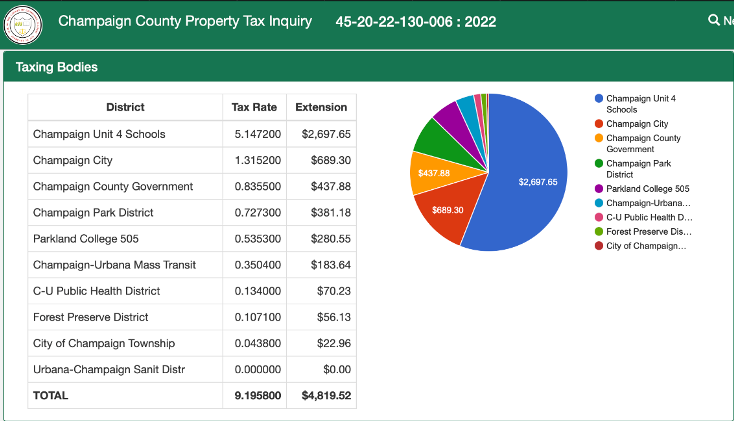
For example, in 2022 a house worth $200,000 paid more than $2500 for Unit 4 while paying only $600 in taxes for the city, $400 for the county, and $300 for the park district. This is based on the Champaign county property tax inquiry.
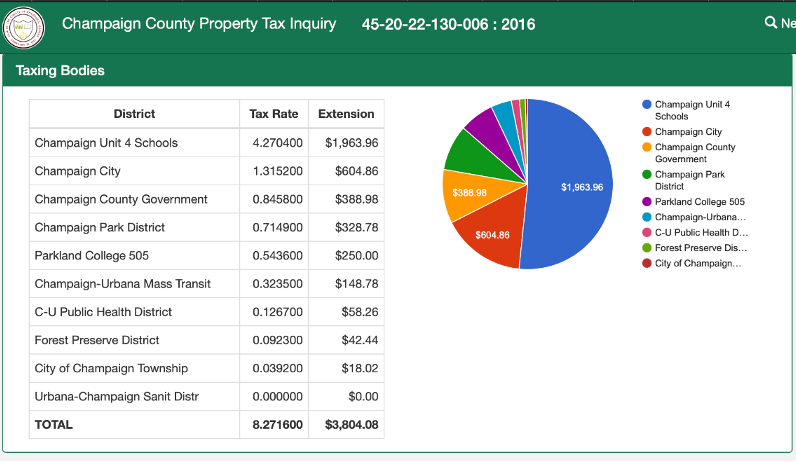
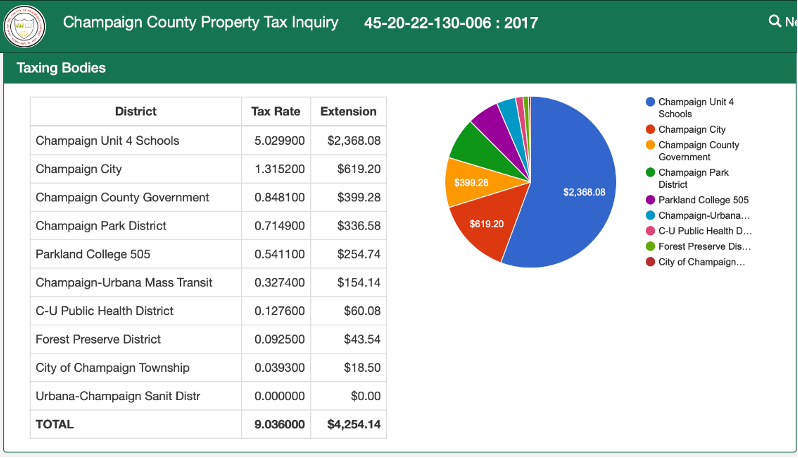
The biggest rise in taxes came in 2017, when voters passed a proposal to issue a school building bond for building upgrades at multiple sites including Central and Centennial High School, Dr. Howard Elementary, International Prep Academy, and outdoor sites Mckinley Field and Spalding Park.
The district spends an average of nearly $15 thousand per student across all campuses.
However, Holder says it will take a lot more cutting before homeowners see a significant drop in property taxes.
Carla McCowan, director of the counseling center at the University of Illinois Urbana-Champaign and long-time community member supports the efforts of the district. She says a price can never be put on education.
As property taxes continue to rise, it’s unclear when the community could see another tax referendum.
“It’s going to take time,” said Holder. “You’re gonna need to do a lot of necessary improvements. You know, There’s gonna be different phases of it, and it’s truly never ending.”
The bond issue added more than $400 in payments for a $200,000 home from 2016 to 2017.
According to financial statements, the district receives a larger portion of Countywide School Facilities tax funds due to their increased enrollment that surpasses nearby districts.
Linda Matkowski, Chief Financial Officer of Champaign Unit 4, was unable to comment at this time.
Currently, the district is responsible for more than 10,000 students in the Champaign, Savoy and Bondeville area. There are 19 campuses, of which, all of them have received modifications in the last 10 years.
The district’s exact budget for the 2024 school year was not found. Although expenditures were $11 million below their initial budget, according to financial statements.
The district spends an average of nearly $15 thousand per student across all campuses.
However, Holder says it will take a lot more cutting before homeowners see a significant drop in property taxes.
Carla McCowan, director of the counseling center at the University of Illinois Urbana-Champaign and long-time community member supports the efforts of the district. She says a price can never be put on education.
As property taxes continue to rise, it’s unclear when the community could see another tax referendum.
“It’s going to take time,” said Holder. “You’re gonna need to do a lot of necessary improvements. You know, There’s gonna be different phases of it, and it’s truly never ending.”